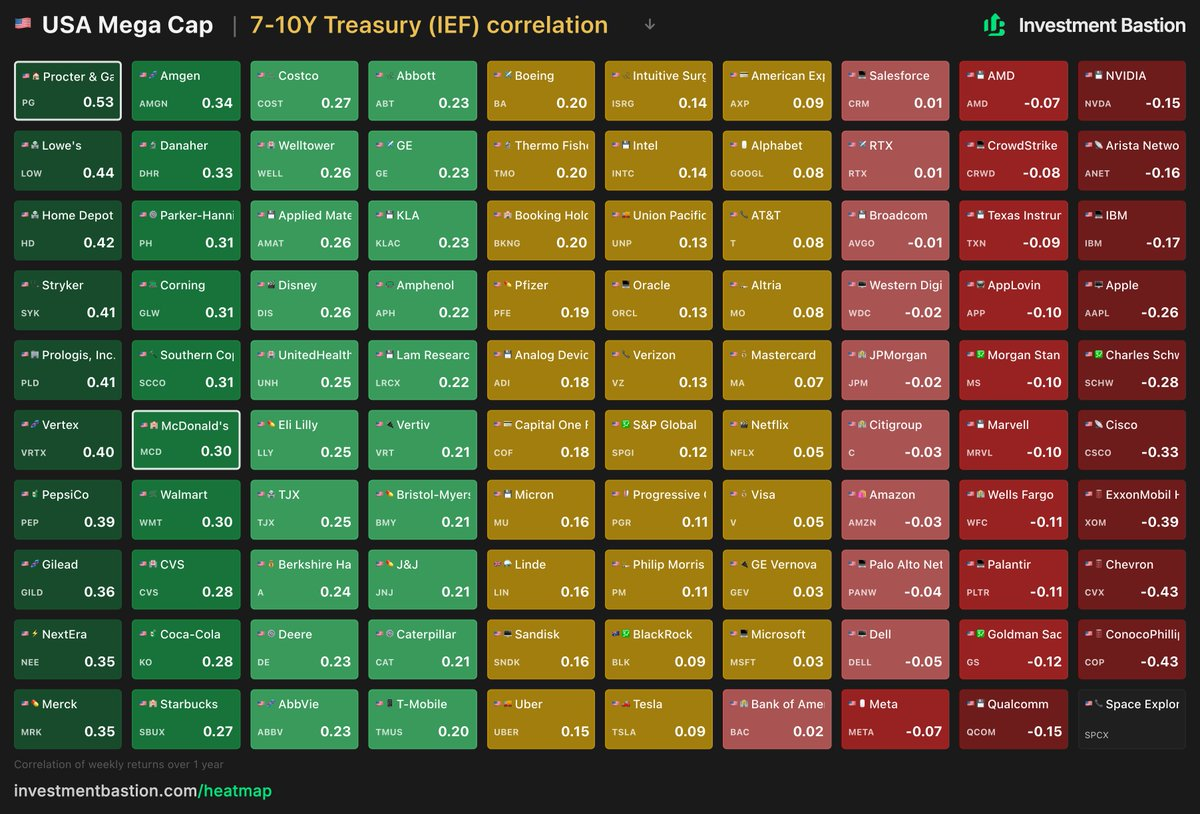
A viral post on X says McDonald's stock follows Treasury bonds.
True, but it's not even in the top 15. The closest link belongs to Procter & Gamble.
I ran the test on the top 100 US mega caps: the correlation of weekly returns with 7-10Y Treasuries over the past year. A positive number means the stock tends to rise when yields fall.
🧴 Procter & Gamble 0.53 $PG
🔨 Lowe's 0.44 $LOW
🏠 Home Depot 0.42 $HD
...
McDonald's ranks only 16th, at 0.30.
Why P&G? Investors hold it almost like a bond. People buy Tide, Pampers and Gillette in any economy, so its earnings barely move with the cycle. It has raised its dividend every year since 1956. That makes P&G a steady stream of cash, and the value of that stream depends mostly on interest rates. When yields fall, a safe 4-5% from Treasuries looks less attractive and money moves into P&G. When yields rise, bonds pay a similar income with no stock risk, and P&G loses buyers.